This summer, I spent six weeks in Greenville, North Carolina, as a Coastal Hazards, Economic Prosperity, and Resilience (CHEER) Summer Scholar. The CHEER Summer Scholars Program brings together students from universities nationwide to apply their perspectives to the challenges local communities face in response to hurricanes.
As part of the program, we traveled across Eastern North Carolina to meet changemakers and stakeholders, including nonprofit organizations and local and state government officials, to learn how their communities prepare for and respond to hurricane risk.
Before starting the program, I met with the director, Dr. Meghan Millea, to discuss possible research questions for my final project. I initially thought I would focus on how tourists receive and respond to hurricane risk information. However, my focus quickly shifted as we immersed ourselves in the program.
Shaping My Research Questions
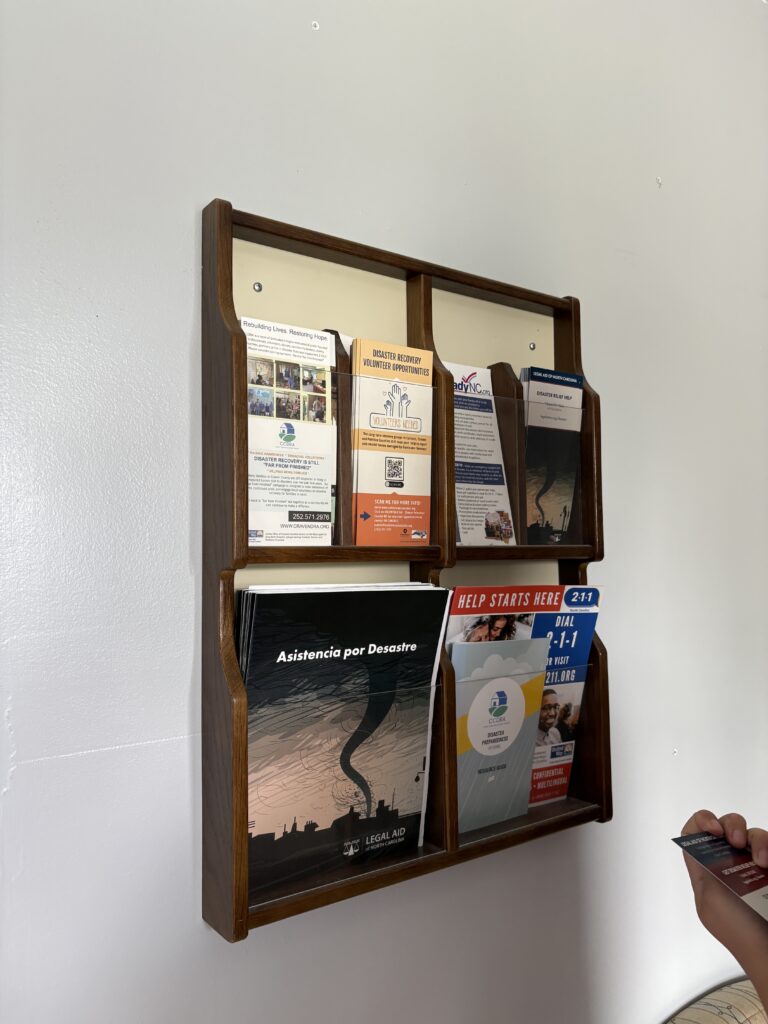
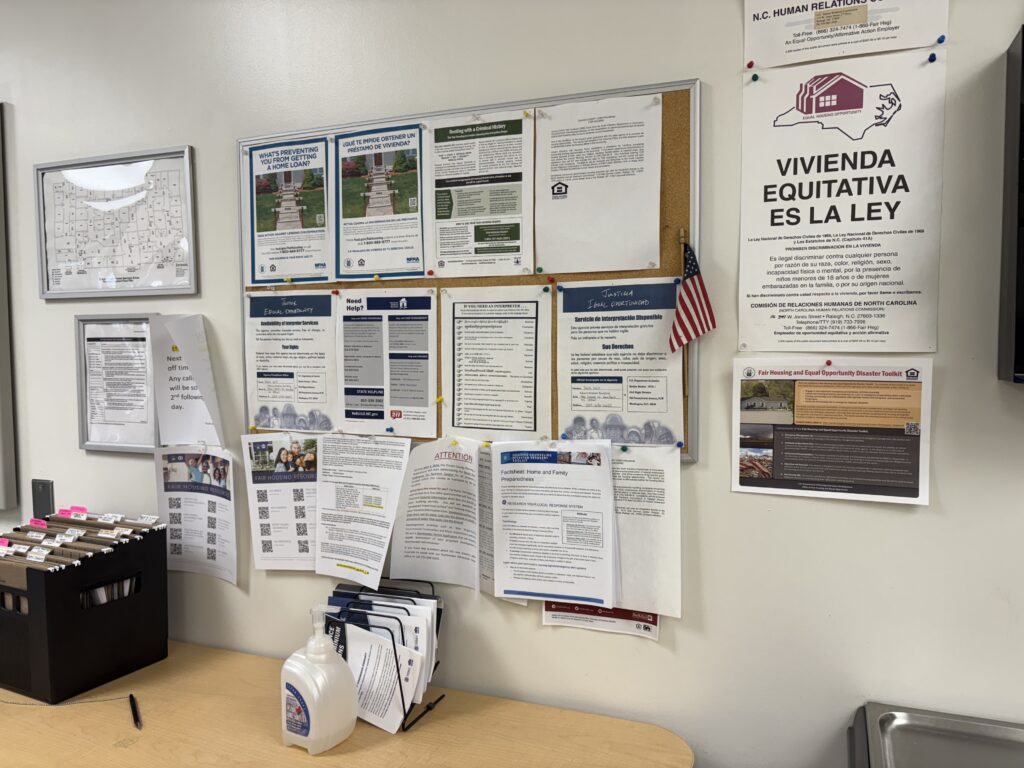
One of our first site visits was to Oriental, NC, the “Sailing Capital of North Carolina.” Oriental is a small, quiet town on the Neuse River. During our visit to Oriental, we met with an organization that provides disaster relief and financial support to residents impacted by storms. During our discussion, I asked about vulnerable populations within the community and learned that, while there are some Hispanic families in the area, they rarely ask for support. When I asked if the organization provided materials in Spanish, the answer was no.
At a county planning office, which works with residents on property buyouts and home elevation processes, I again asked whether their brochures were available in Spanish. An office employee responded, “That’s a great idea!”
Hispanic populations in Eastern North Carolina may be smaller than in other parts of the state, but they are integral to their local communities. They contribute across industries such as boat manufacturing, landscaping, agriculture, hospitality, and through leadership roles in local government and nonprofit organizations. So, why weren’t more efforts being made to serve Hispanic residents?
These insights shaped my research focus on how hurricane risk is communicated to Hispanic communities in Eastern North Carolina. I began asking those we met: How do you serve the Hispanic community?
Insights from Eastern North Carolina Communities
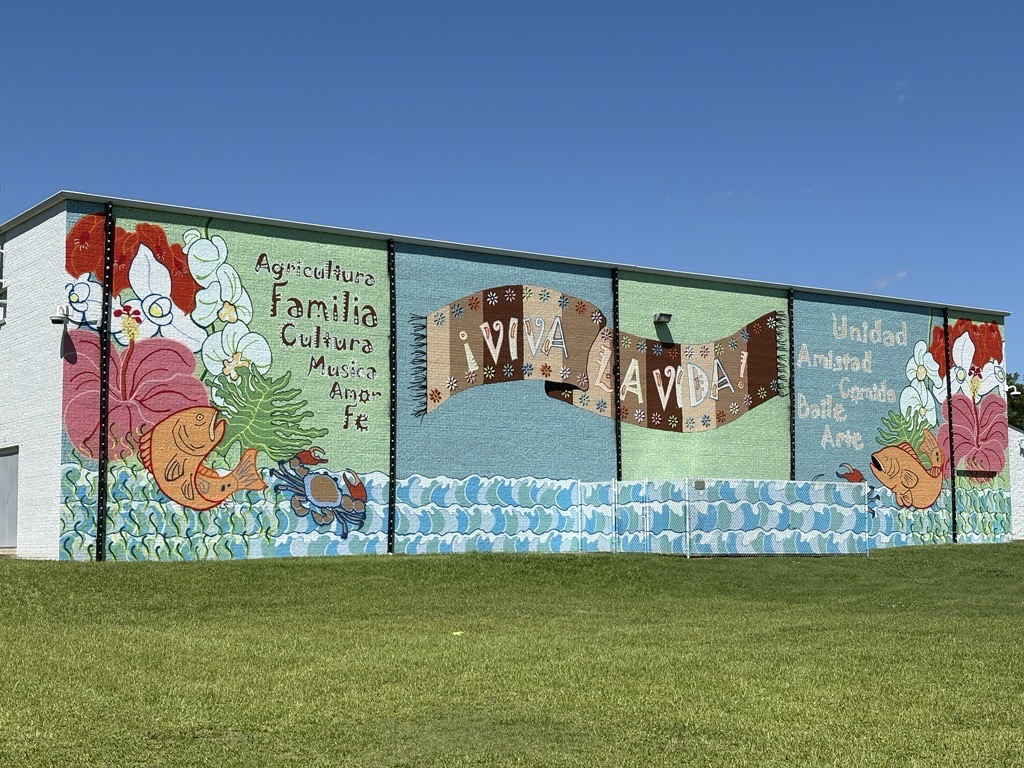
With each visit, I learned about the challenges and successes experienced across the region. Trust between Hispanic communities and their local government is essential for improving communication. Partnerships with local community organizations help build relationships and strengthen communication. Representation also plays a critical role in reaching vulnerable communities. In Washington, for example, the town celebrates its Hispanic community by providing resources and representation. The city has a Latino Community Outreach Coordinator who helps connect the community to educational, health, and financial services. The community is also celebrated every fall at the Hispanic Heritage Festival which connects community members to city services and local partners while they enjoy food and music. Another symbol of this commitment is the “¡Viva la vida!” mural. Designed by a Hispanic artist and created with the help of hundreds of local students, the mural reflects the beauty of community engagement. The mural was also featured in a PBS Special, Inclusive Public Art Project: Viva La Vida Mural, which documented both the process and its significance for the community.
Common challenges when serving Hispanic populations included a lack of translated materials, a shortage of bilingual staff, and limited representation in decision-making at both the local and state levels. The current political climate compounded existing language barriers. Many community members hesitated to seek support and often protected one another by limiting interactions with outsiders. In turn, some organizations restricted their outreach and resources. Building trust became an even greater challenge for undocumented residents in particular, since the fear of deportation created additional hesitation in seeking support or engaging with government offices.
One of the most meaningful meetings I had was with the executive director of the Association of Mexicans in North Carolina (AMEXCAN). He shared how, despite their limited staff and resources, the association continues to support Hispanic communities across the state. Whether offering health workshops, college admission guidance, or information about approaching hurricanes, AMEXCAN plays a critical role in bridging communication gaps and building resilience. The organization stands as an example and a vital resource for meeting the needs of Hispanic populations, particularly during times of crisis.
Lessons Learned
While six weeks is not long enough to fully understand the lived experience of North Carolinians, my experience highlighted the importance of place and space. From a geographical lens, learning how different communities mitigate and respond to hurricanes was eye-opening. Growing up in South Florida, my own experience with hurricanes shaped my childhood and future research interests. I witnessed how more property and communities became at risk as small beach boardwalks became expensive hotel resorts and high-rise condos. My family always had access to preparedness information in multiple languages, which kept us informed and prepared for any approaching storm. Letting go of my own lived experiences, moving beyond the quantification of social vulnerability in journal articles, and meeting the people who work tirelessly to make their communities safer and more resilient was invaluable.
This formative experience is one of the most valuable programs I have participated in. It gave me the opportunity to develop my own research questions and immerse myself directly in the Eastern North Carolina community. I witnessed firsthand how Highway 12, the only road leading into and out of the Outer Banks, is flanked by sand dunes, and how coastal homes are being lost to rising sea levels. These observations, combined with conversations with those directly impacted by their built environment when hurricanes make landfall, brought meaning to my research. Through this great opportunity, I expanded my professional network, made meaningful connections, and formed friendships. I hope to continue this work and return to North Carolina in the future. For any student who is interested in exploring community engagement, resilience, and recovery, I highly encourage applying to the CHEER Summer Scholars program.
Michelle Ruiz is a PhD candidate in the Geography Department at the University of Florida. Her research interests include the societal impacts of weather events, risk perception, risk communication, and social vulnerability. Michelle’s current research examines hurricane risk perception and communication within Spanish-speaking communities.