

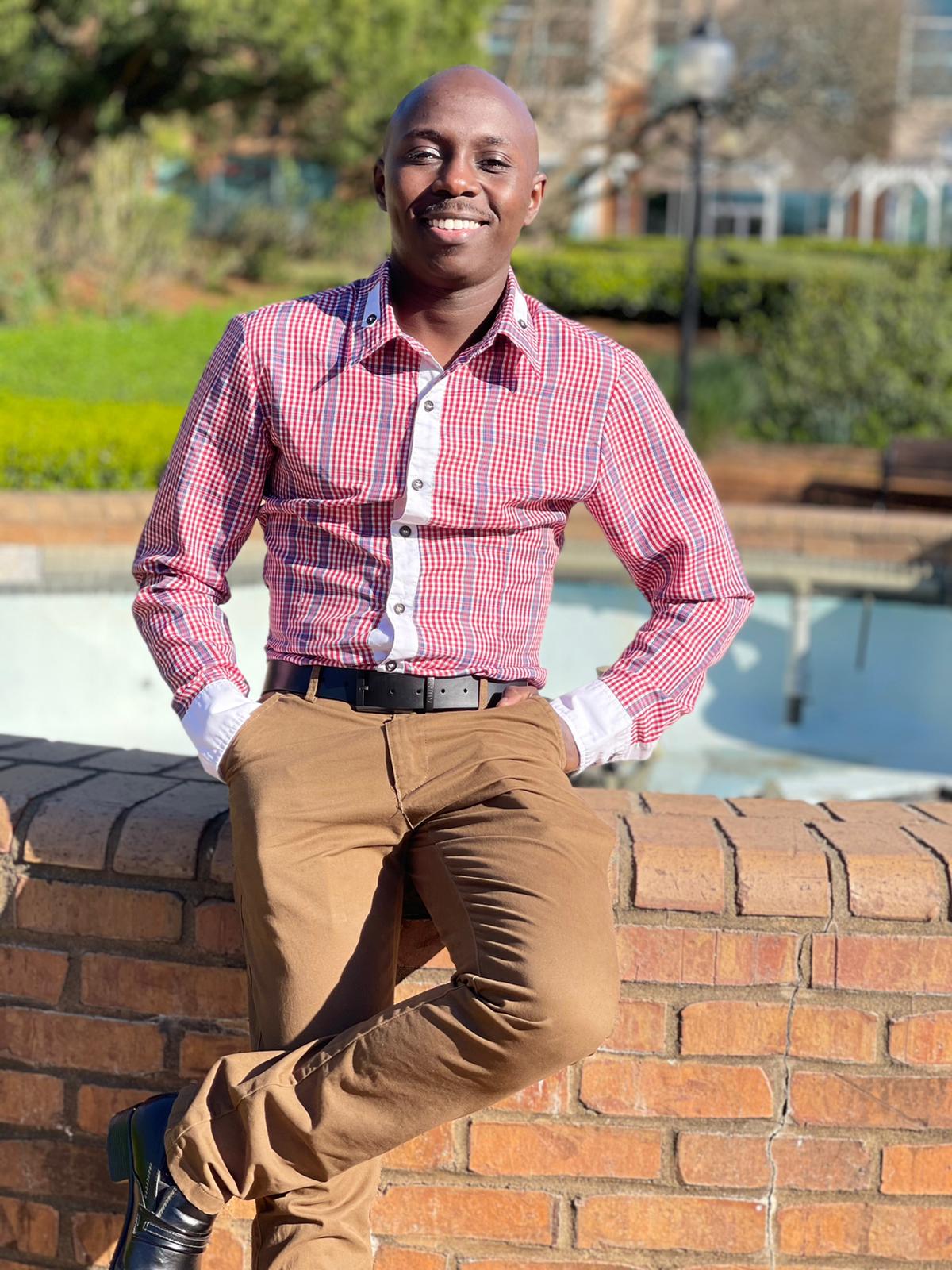
Our Featured Fellow for September 2024 is Joseph Karanja, a PhD candidate in Geographic Information Science at Arizona State University (ASU) in the School of Geographical Sciences and Urban Planning. Joseph holds a master’s in Geosciences (Geography) and a postgraduate certificate in GIS from Georgia State University (GSU). Joseph also holds a master’s in Science (Climate Change and Sustainability) and a bachelor’s in Environmental Planning and Management from Kenyatta University in Kenya.
Joseph joined the BAF in 2022 and has served on the Lightning Talks committee from 2022 to the present, taking on the role of Committee Coordinator for the 2023-2024 academic year. He also recently served as a research assistant on a collaborative project between the Bill Anderson Fund and Headwaters Economics entitled “A Comparison of Vulnerability Maps Used by Federal Agencies to Allocate Climate Resilience Resources.” His work on this study was featured in the Natural Hazards Center’s Making Mitigation Work webinar series in June 2024.
Joseph’s dissertation intersects heat vulnerability, Geographic Information Science, and health outcomes. Specifically, Joseph’s research entails the integration of socioeconomic and environmental characteristics, and examines how they interact across multiple spatial and temporal scales to define a variety of heat health outcomes such as heat-related 911 emergency calls and hospitalizations. Additionally, Joseph investigates how different spatial analysis methods and methodological decision criteria influence the determination of vulnerable populations and locations, and their implications for policymaking. Most recently, his collaborative work applies varied statistical techniques to understand relationships between Oceanic circulations such as the El Nino and Southern Oscillations and southwest US winter precipitation. Joseph also collaborates with researchers applying human physiological modeling of heat.
Joseph has extensive teaching experience as a teaching assistant and instructor of record anchored in active and student-centered learning, culturally responsive teaching, and tailored learning styles to accommodate students’ varying abilities, and interests. Joseph has taught courses such as Introduction to Remote Sensing, Introduction to GIS, Advanced GIS, Introduction to Meteorology, Introduction to Weather and Climate, and World Geography.
Joseph has also been involved in several leadership roles as a graduate student such as student board member for the Board on Urban Environment of the American Meteorological Society; student lead for the Urban Climate Research Center at ASU; and lead teaching assistant at GSU.
Notable grants, fellowship awards, and honors that Joseph has received include the NSF Doctoral Dissertation Research Improvement, ResearchAmerica civic engagement micro-grant, ASU’s interdisciplinary enrichment fellowship, International Association of Urban Climate best student presentation, and American Association of Geographers Access award.
Joseph is a member of multiple professional associations where he has actively presented and or organized sessions. They include; the American Association of Geographers; the International Association of Urban Climate; the International Congress of Biometeorology; and the American Meteorological Society.