Purpose
The Bill Anderson Fund supports the development of professionals who are working to reduce harm and suffering among communities that are disproportionately affected by extreme events and other environmental hazards. We empower the next generation of leaders to bring fresh perspectives and innovative approaches into hazards and disaster research, scholarship, policy, and practice. Our programs facilitate professional advancement among doctoral students and early-career alumni through training, mentorship, and a network of mutual care and support. Our work emphasizes the lived experiences and expertise of communities in recognition of their self-defined priorities for resilience.
The poor and people of color, especially minority women, are underserved when it comes to society's ability to make resources available for mitigating, preparing for and recovering from hurricanes, earthquakes and other natural disasters. Members of these groups are generally at greater risk to disaster and have fewer resources with which to respond to and recover from them...A number of actions could help empower the underserved and link them to the natural disaster reduction subculture. A first step is to bring the underserved into the research professions relevant to natural disaster mitigation - including engineering, the physical sciences and the social sciences. Minorities currently represent a relatively untapped resources in these fields.
- Excerpt from Bill's presentation at the 1996 Aspen Global Change Workshop
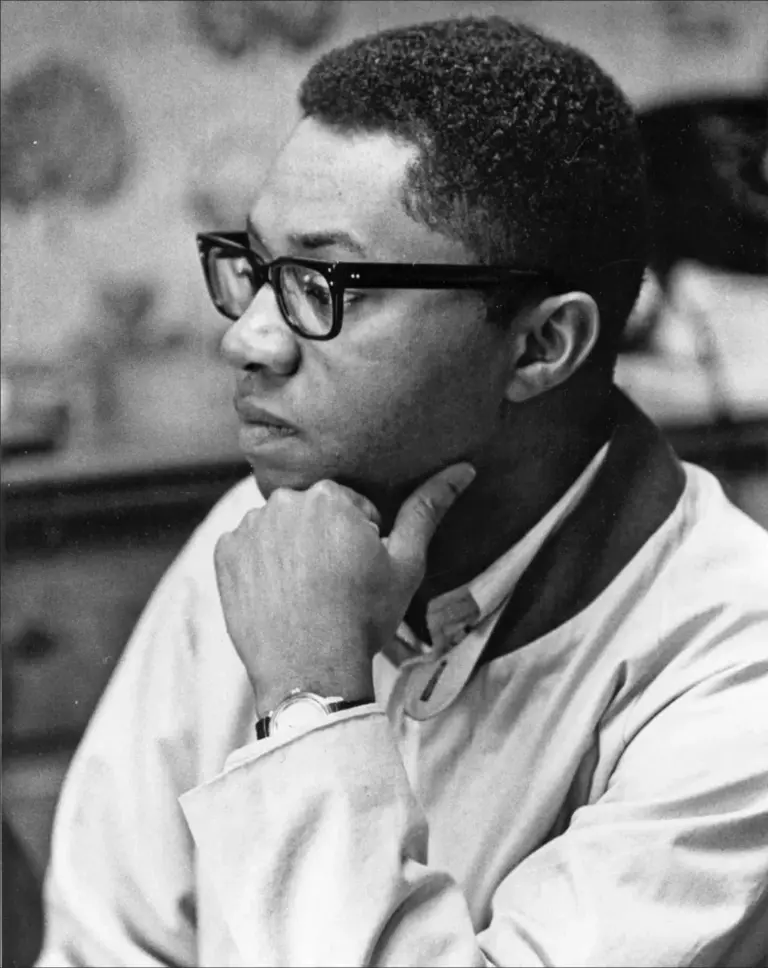
Bill's Story
Dr. William (Bill) Averette Anderson was born on May 28, 1937 in Akron, Ohio. His mother’s maiden name was Ruby Browner, and his father was named William Warren Anderson.
Bill was an accomplished scholar, researcher, mentor, and leader who worked tirelessly in the field of disaster risk reduction in a career that spanned more than 50 years. As the nation’s first African American sociologist of disaster, Bill dedicated his life’s work to analyzing and taking actions to mitigate the causes and consequences of hazards and disaster risk. His distinguished career included positions at the American Sociological Association, National Science Foundation, the World Bank, and the National Academies.
Bill’s life story was captured in the 2011 edition of Connections, the Earthquake Engineering Research Institute Oral History Series. Robert Reitherman was the interviewer. We encourage you to read this publication to learn about Bill’s life in his own words.
Interview Excerpt
An excerpt from Bill’s interview on life in Akron:
“I grew up in Akron, Ohio and went to grade school, junior high and high school there. We lived on Lods Street. I was born in a house on a street about two blocks from where I spent most of my childhood. This was the North side of Akron, which at one point had a lot of Italians, but they had moved to another section of town, North Hill.
We lived on the banks of the Little Cuyahoga River, a branch of the same river that runs through Cleveland. That river became newsworthy when many years ago it was said to have caught fire from all the pollution in it.
My parents separated when I was very young. I have a sister, Janice, who is three years younger. We went to live with my maternal grandparents, George and Roxie Browner. They had migrated some years before from a small town in Georgia called Elberton. They came to Ohio during the great migration of blacks to the Northern cities prior to the Second World War – looking for jobs, greater freedom and a better quality of life.”